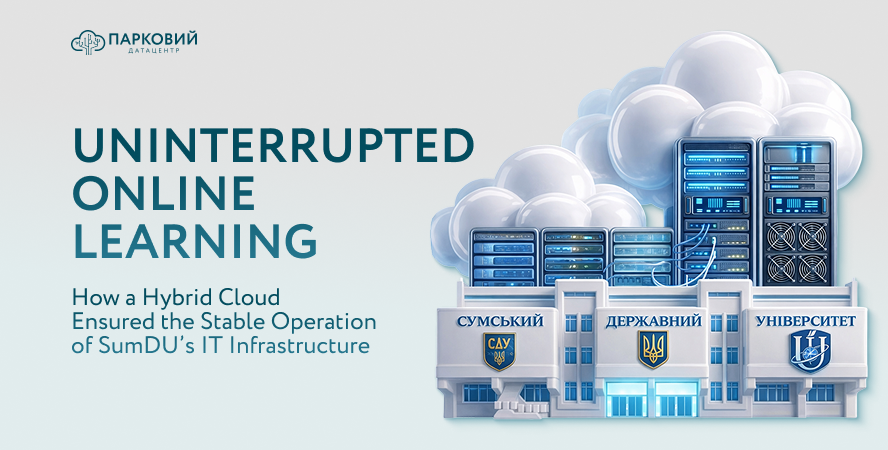
Hybrid Cloud as a Tool for the Resilience of University Management Systems: The Experience of SumDU
2025-12-18 12:44:09
Challenge
Sumy State University is one of the leaders in implementing digital solutions across educational, research, and administrative processes. The “University” information and analytical system with electronic document management provides comprehensive support for virtually all management and academic processes.
Until 2022, part of the infrastructure operated locally on the university’s own servers. At the same time, increasing workloads, the need for scalability, and higher data security requirements created the need to transition to cloud technologies. PARKOVYI Data Center won the tender to build a virtual data center.
The transition to a modern cloud platform and the modernization of the IT infrastructure ensured the stable operation of management services and the organization of the educational process at Sumy State University.
How the Hybrid Model Improved the Performance of SumDU Online Services
PARKOVYI Data Center specialists proposed a hybrid infrastructure model for the university. Almost all services of the “University” information and analytical system were migrated to the cloud environment. A small portion of non-critical services remained on local servers.
This solution made it possible to increase performance, simplify administration, and ensure uninterrupted operation. Students, faculty, and university administrators can work reliably both during peak loads and prolonged blackouts.
Geo-Distributed Backups and Cloud Infrastructure
Backups of the university’s infrastructure are stored simultaneously in the PARKOVYI Data Center cloud in Kyiv and duplicated at a geographically remote site. This approach protects data from technical failures and cyberattacks, as well as from physical risks related to war or extended power outages.
Geo-distribution reduces the risk of losing critical information, and the university’s IT team can quickly restore services from backups by selecting the optimal hosting site.
Secure Migration
Part of the university’s infrastructure was migrated to the cloud without service downtime or interruptions to the educational process. The migration was carried out in stages: first, test environments were deployed, system compatibility checks and load testing were performed, and only then was the primary site switched over.
The cloud-based infrastructure became the foundation for the stable operation of educational platforms and enabled the university to quickly launch new academic programs, as well as flexibly adapt resources to changes in student numbers or learning formats.
Results
- Stable online learning even during peak loads;
- Reduced risk of data loss thanks to geo-distributed backups;
- Cost savings on equipment procurement and maintenance;
- Simplified administration and the ability to quickly adjust configurations;
- Enhanced IT infrastructure security.
Sumy State University gained stable online learning, geo-distributed backups of critical information, and significant savings on server hardware procurement. The hybrid cloud became a reliable foundation for continuous education in turbulent conditions.
Latest news
Company news
2026-03-10 13:16:26
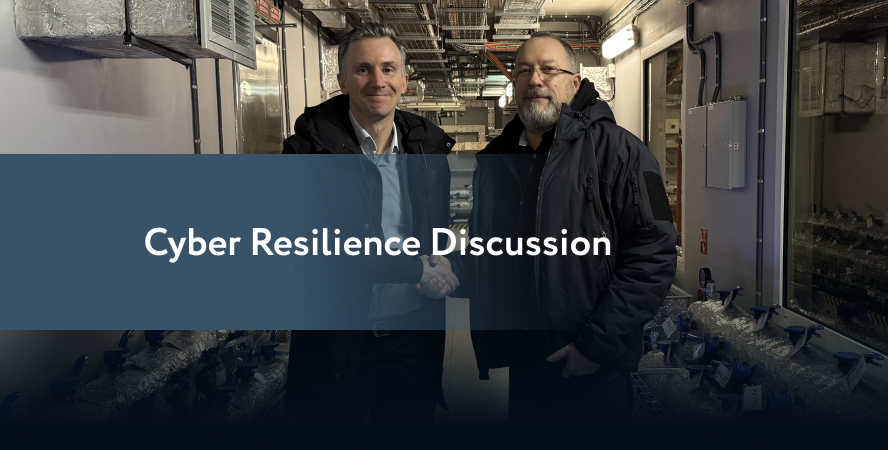
On March 3, the PARKOVYI Data Center hosted Mr. Niels-Christian Holt, Vice President of Defense Development at TDC. During the visit, key engineering and technological solutions that ensure a high level of security and resilience of IT infrastructure were demonstrated using the infrastructure of one of the data center’s facilities as an example. The meeting […]
Case studies
2025-12-18 12:44:09
Sumy State University is one of the leaders in implementing digital solutions across educational, research, and administrative processes.
Company news
2025-12-16 14:19:51
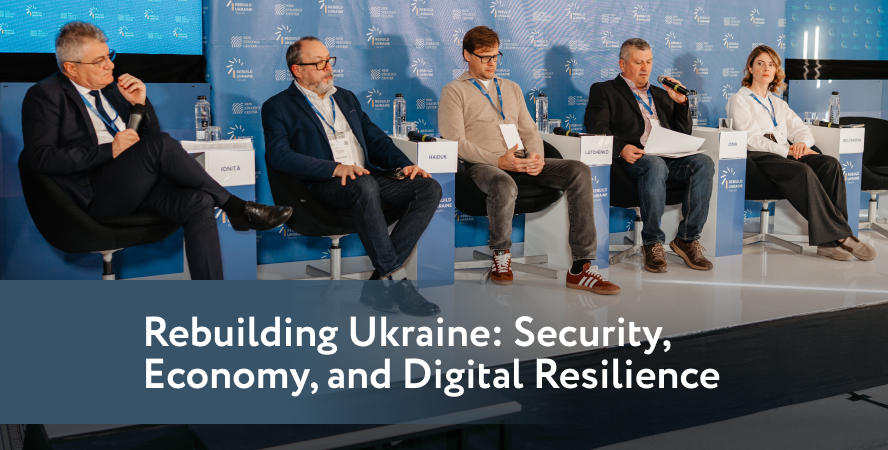
Parkovyi Data Center took part in the international forum Rebuilding Ukraine: Security, Opportunities, Investments in Bucharest, where, together with Romanian and European partners, participants discussed Ukraine’s reconstruction in the security, economic, and digital sectors. During discussions on digital resilience and cloud infrastructure development, participants focused on practical approaches to ensuring the continuity of critical services […]
 Sales department: