
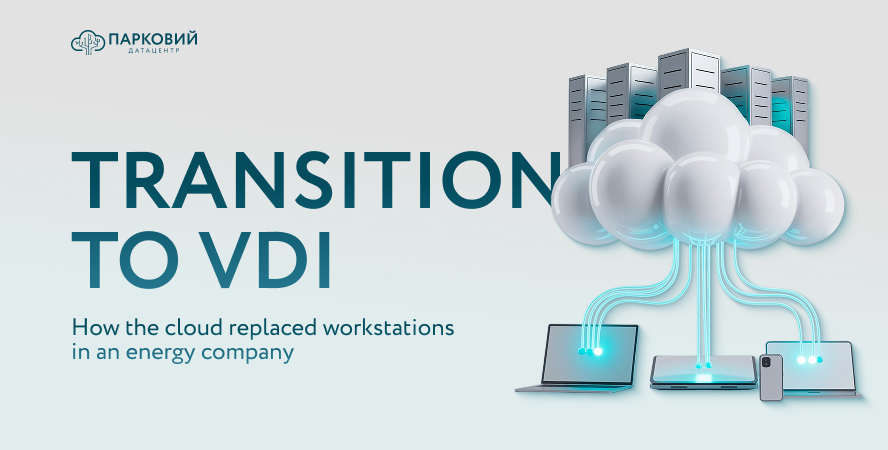
How the Cloud Replaced Physical Workstations in an Energy Company
2025-11-20 16:10:42
Challenge
An energy sector company (the name is undisclosed due to an NDA) was looking for a way to provide specialists working with industry-specific software (Petrel, ArcGIS Desktop) with high-performance computing resources without being tied to physical workstations. The key requirements included stability under heavy workloads, a high level of user experience, and the ability to scale the solution. Initially, the company considered purchasing powerful laptops with dedicated graphics cards, but a financial analysis showed that this would significantly increase CAPEX, require substantial investments, and still fail to provide the desired flexibility in resource scaling.
Solution
Instead of investing in hardware, the company chose a modern approach — Cloud Desktop Infrastructure (CDI) built on Virtual Desktop Infrastructure (VDI) technology. This means that all workstations now operate in a virtual desktop environment, and performance can be adjusted for specific tasks — from office work to complex calculations of reservoir models, 3D graphics, and cartographic operations.
From Hardware Purchases to Virtual Workspaces
The transition to VDI made it possible to create virtual desktop environments hosted on a local data center infrastructure that complies with information security requirements (KСZI) and ISO standards. The virtual desktops are isolated within a secure perimeter, and access is granted only to authorized users.
At the energy company, the solution was implemented using Omnissa Horizon 8 (VMware Horizon), integrated with the VMware vSphere platform and running on DELL hardware with powerful NVIDIA GPUs. This unified remote employees into a single working environment and ensured stable performance, high resource availability, and full fault tolerance.
Administrators gained:
1. Full control over the desktop infrastructure
- all workstations are standardized;
- user profiles and resources are managed from a single console;
- there is no longer a need to maintain a fleet of physical workstations.
2. Transparent performance monitoring
During testing, administrators observed real metrics in vCenter:
- CPU utilization reaching up to 100% during peak loads;
- stable operation of NVIDIA GPUs;
- no disk bottlenecks in vSAN.
This confirmed that the environment is predictable and easy to manage.
3. Real data for capacity planning and scaling
- clear understanding of how many resources Petrel, ArcGIS, and 3D workloads consume;
- ability to design future VDI machine profiles: graphics, compute-intensive, and office;
- baseline calculations of CPU/RAM/GPU requirements for increasing the number of users.
4. Simplified user support
- users do not experience lags;
- VDI remains stable under load;
- administrators can respond to incidents faster thanks to a unified platform.
5. Proof of VDI readiness for production use
- the environment withstands both typical and peak workloads;
- performance is comparable to physical workstations;
- the solution is ready for full-scale production deployment.
Immediate benefits
- No capital expenditures: the company pays only for the actual use of resources
- Higher security level: isolated environments and strict access control
- Simplified administration: centralized management without physical maintenance and monitoring of user devices
- Full mobility: employees can connect to their work environment from any location in Ukraine or the EU
- Flexibility and scalability: performance can be easily increased or decreased based on current team needs
Measured implementation results
- Confirmed ability to replace a fleet of powerful physical workstations with standardized VDI environments
- Simplified management and support thanks to a unified architecture
- Readiness to scale for additional roles and workloads
After implementing CDI, employees achieved performance that exceeded the capabilities of physical workstations. Complex computations are executed quickly, even during peak loads. Thanks to automated data backup, the company ensures recovery in case of failures, while retention period settings protect backups from malicious deletion. Cloud technologies optimized resource utilization and reduced hardware and maintenance costs by up to 300%, and inter-server traffic by 50–90%.
As a result, the energy company gained a unified, flexible, and secure IT ecosystem that replaced expensive physical workstations, reduced costs, strengthened infrastructure security, and improved overall team efficiency.
Learn more about the solution via the link.
Latest news
Company news
2026-03-10 13:16:26
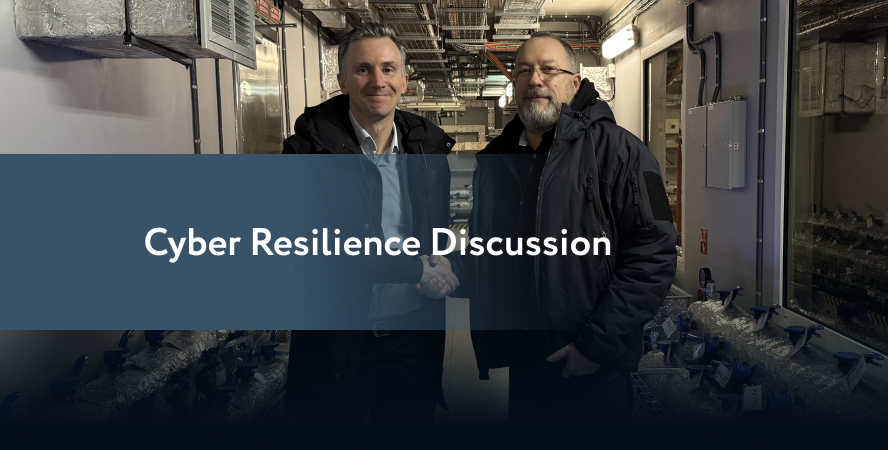
On March 3, the PARKOVYI Data Center hosted Mr. Niels-Christian Holt, Vice President of Defense Development at TDC. During the visit, key engineering and technological solutions that ensure a high level of security and resilience of IT infrastructure were demonstrated using the infrastructure of one of the data center’s facilities as an example. The meeting […]
Case studies
2025-12-18 12:44:09
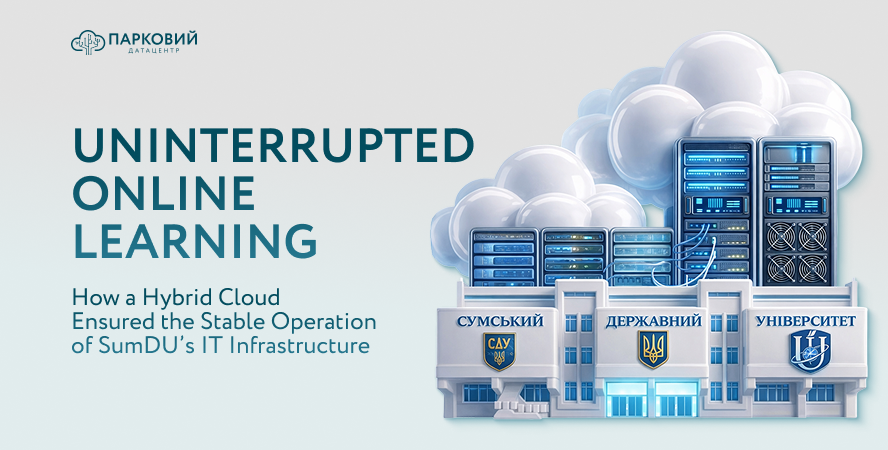
Sumy State University is one of the leaders in implementing digital solutions across educational, research, and administrative processes.

Company news
2025-12-16 14:19:51
Parkovyi Data Center took part in the international forum Rebuilding Ukraine: Security, Opportunities, Investments in Bucharest, where, together with Romanian and European partners, participants discussed Ukraine’s reconstruction in the security, economic, and digital sectors. During discussions on digital resilience and cloud infrastructure development, participants focused on practical approaches to ensuring the continuity of critical services […]
 Sales department: